
The precarious lives of the Sundarbans’ prawn seed collectors
The women earn little while their occupation harms biodiversity
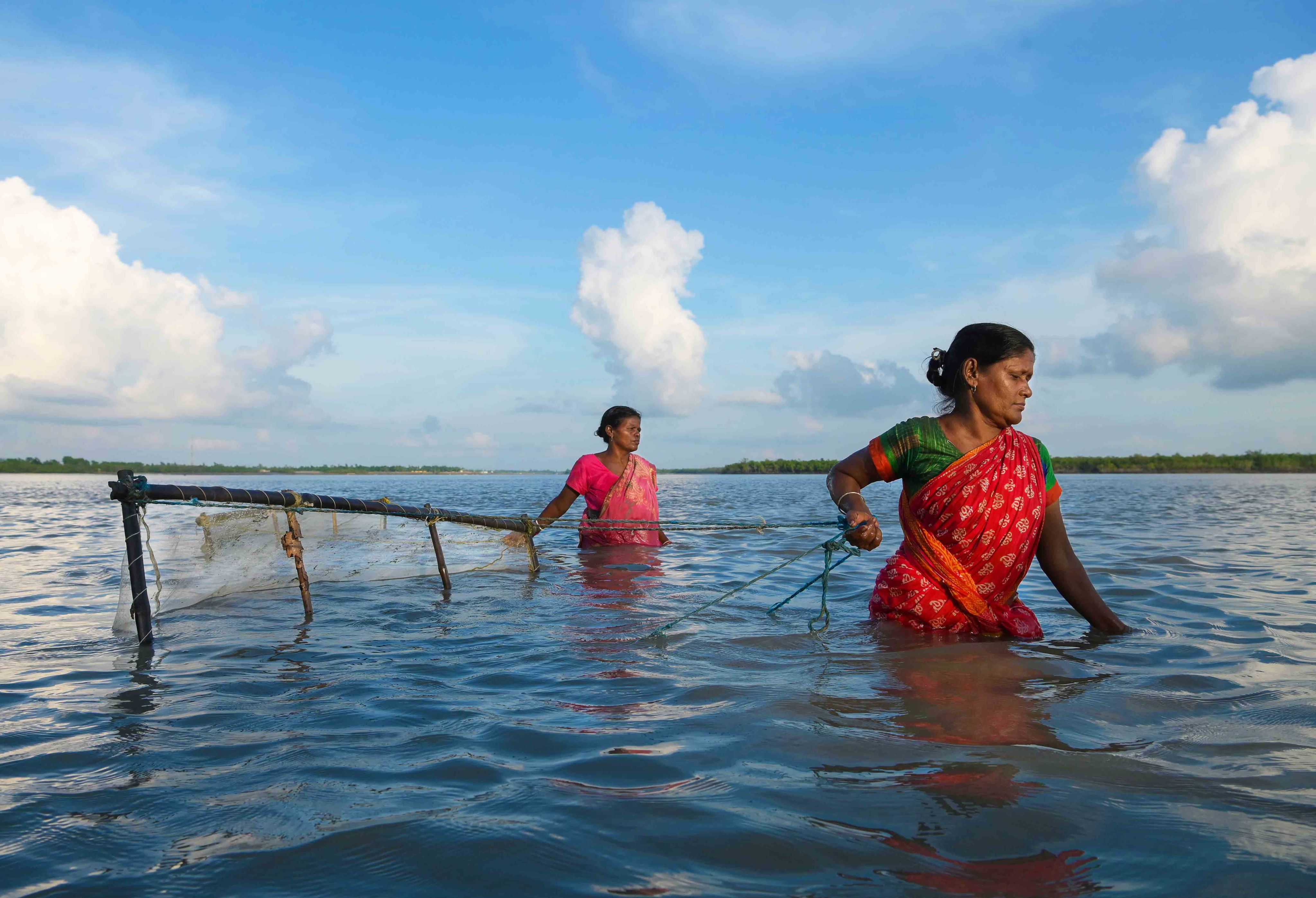

Gosaba, West Bengal: Bhanumati Mondal, 55, spends up to five hours a day wading waist-deep in the brackish Raimangal river along her village Kumirmari, one of the remotest islands in the Sundarban mangrove delta in West Bengal. She is one of the many women in the Sundarbans who collects meen bagda, or prawn seed, for a living.
This earns her a meagre Rs 1,000–2,000 a month. She sometimes works as an agricultural labourer to supplement her income.

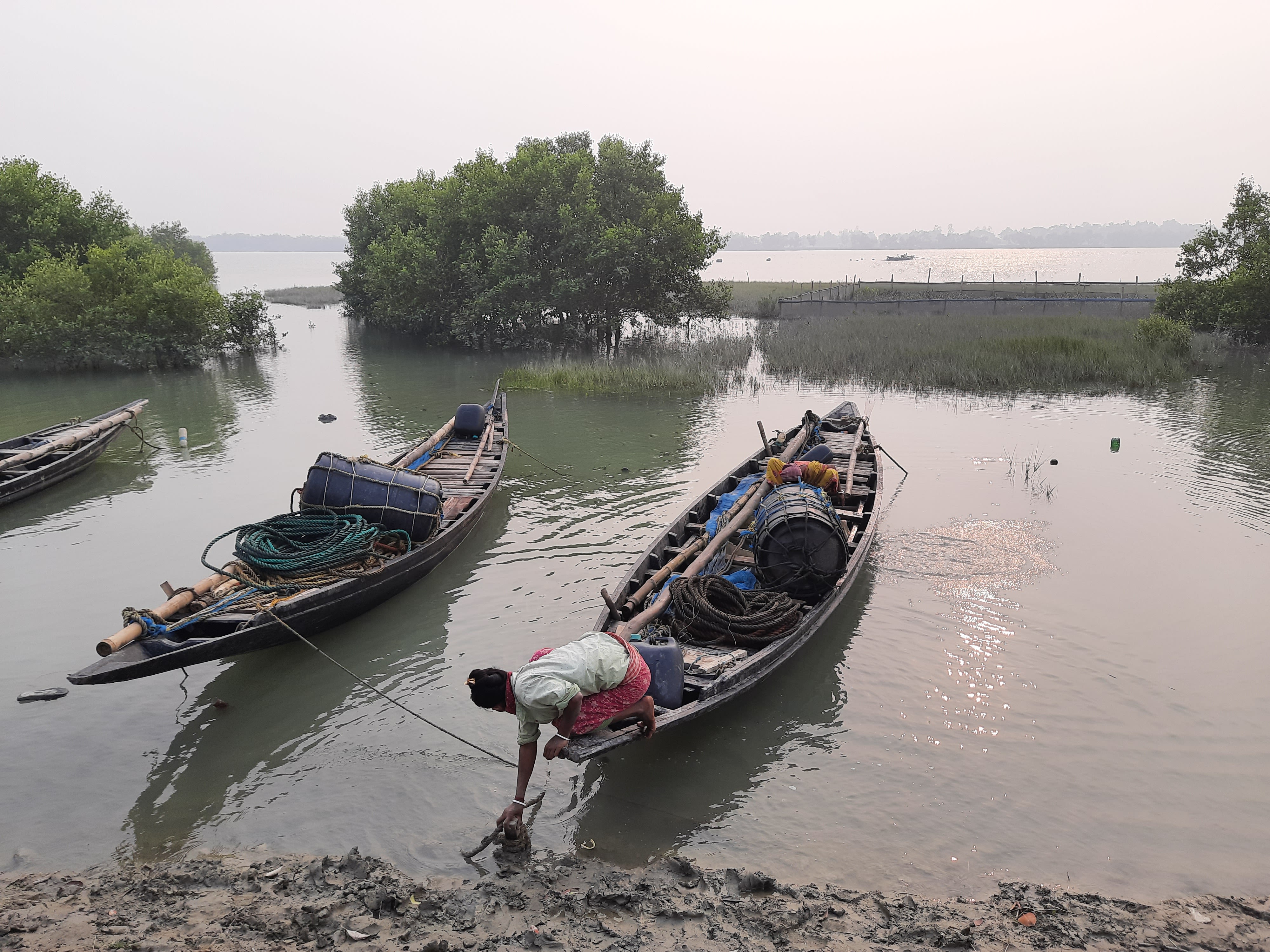
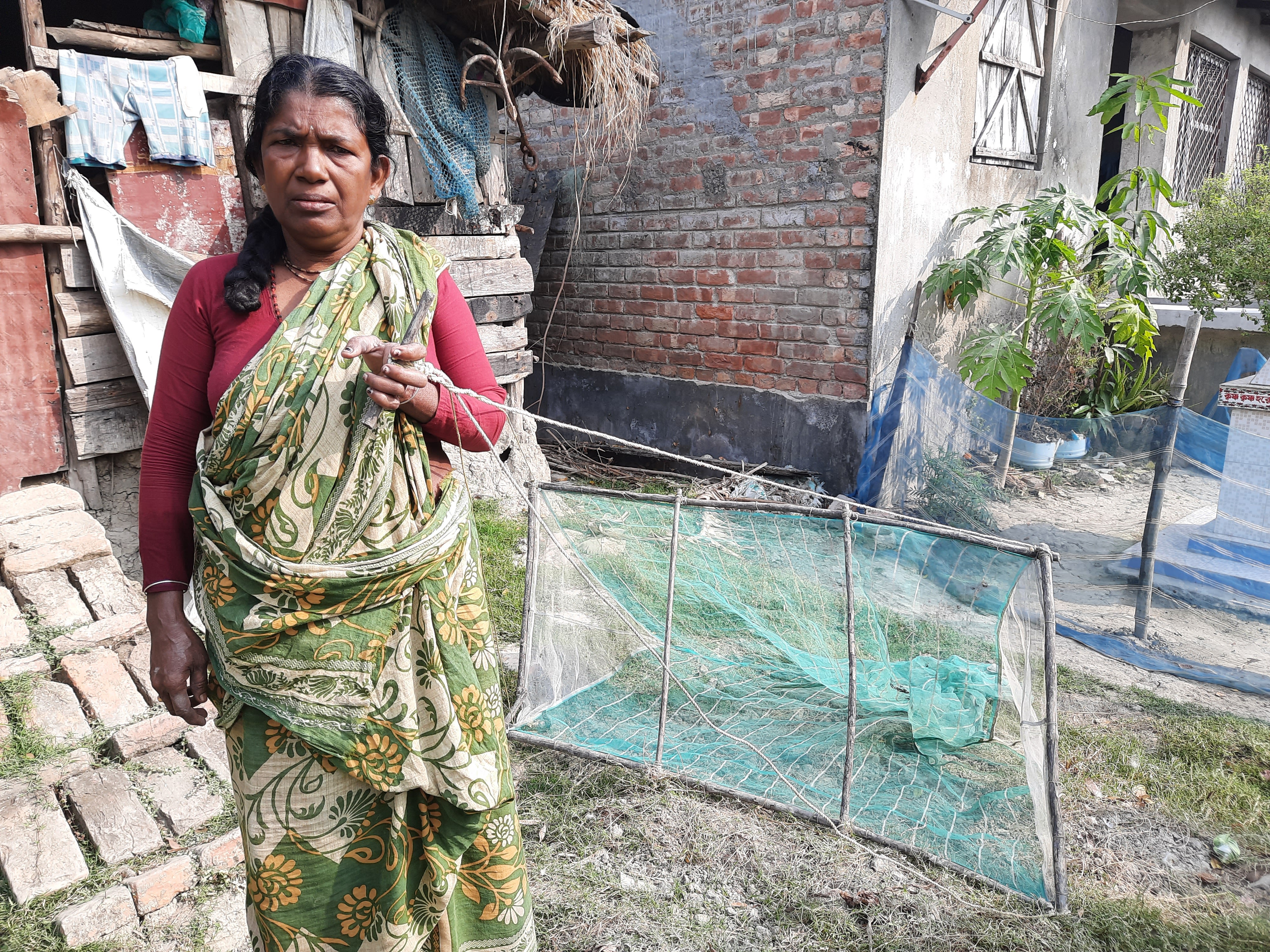
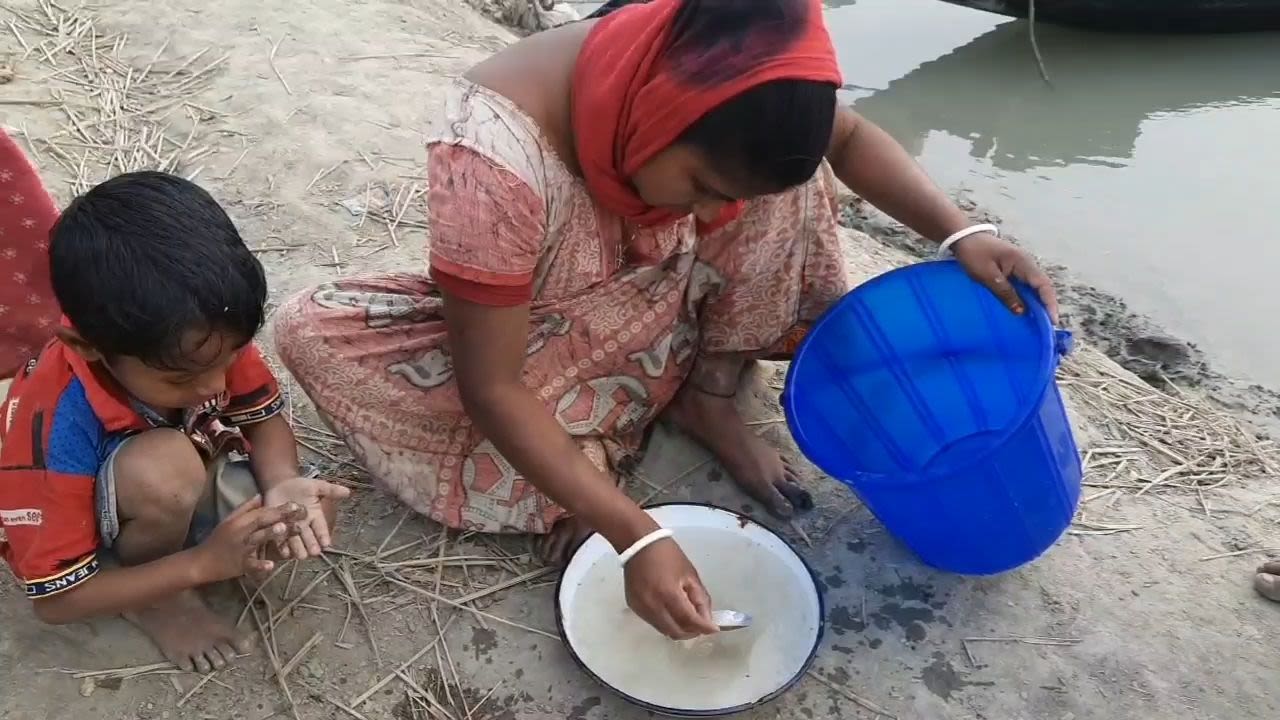
Karuna Mondal, 59, of nearby Pakhiralay village explained the process: “We buy a net about 4–5 hands long. We sew it onto a wooden frame, which we ask the young boys to tie tightly. We go into the water up to the waist, or even higher, then pull the net down the water to catch the prawn seed.”
Those who can afford it rent a boat and fish for prawn seed in the Sundarban Reserved Forests, where the catch is greater.
“But you need bigger nets for that, and renting a boat is Rs 1,000–1,500 a month — which many cannot afford,” said Lakshmi Mondal of Kumirmari (30).

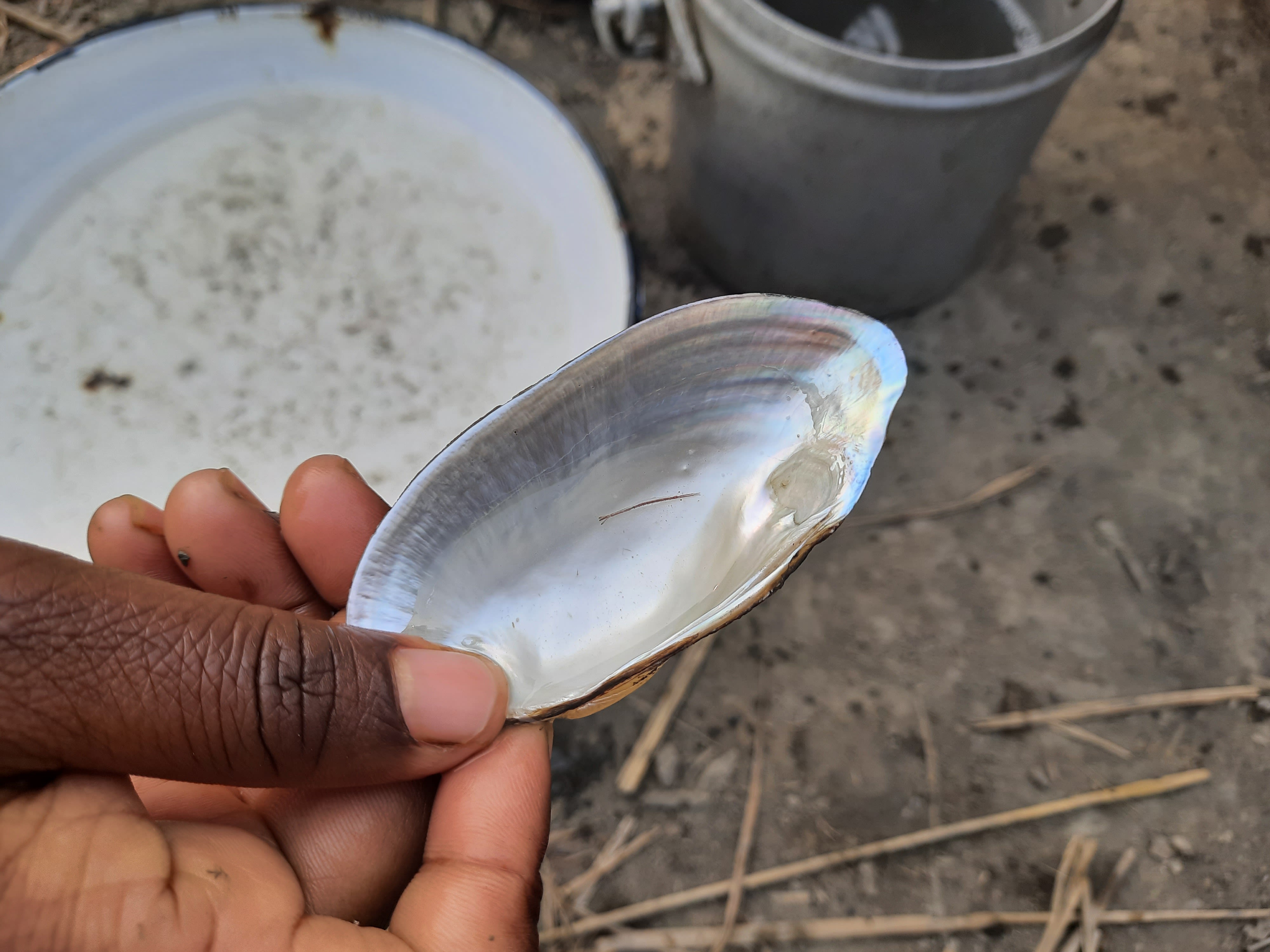
But not just prawn seed — many baby fish, insects and larvae get caught in the process.
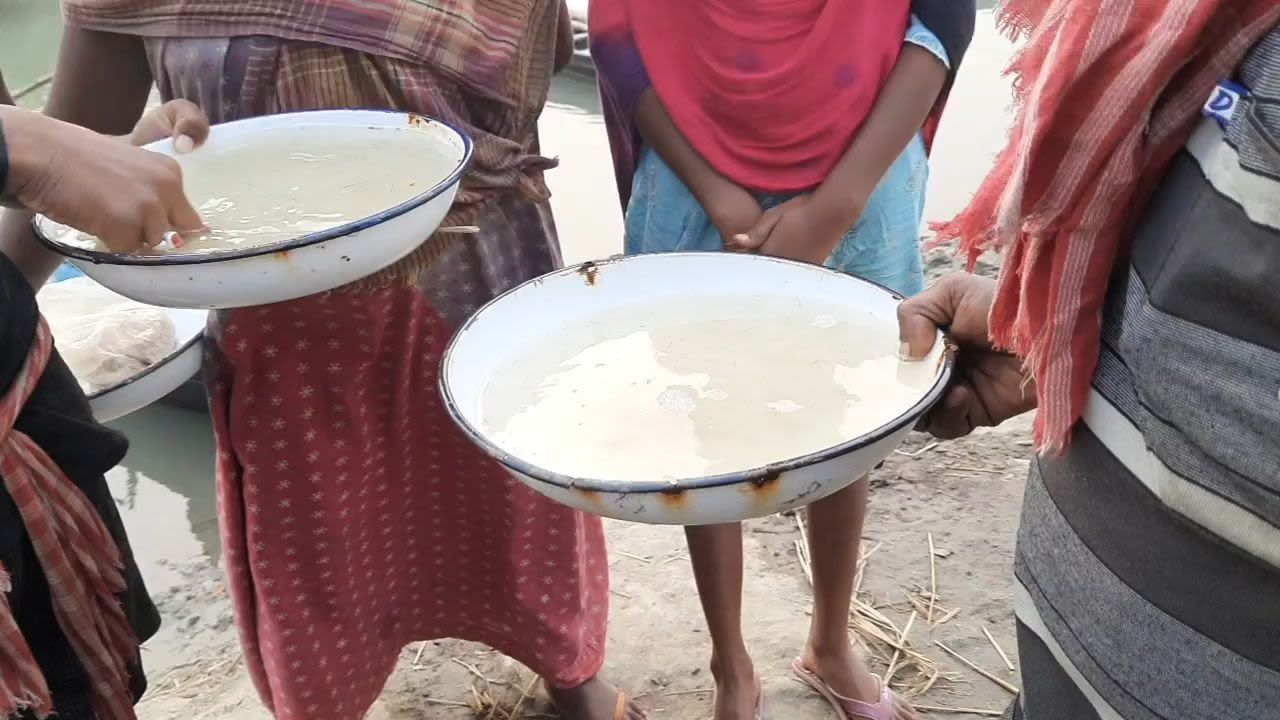
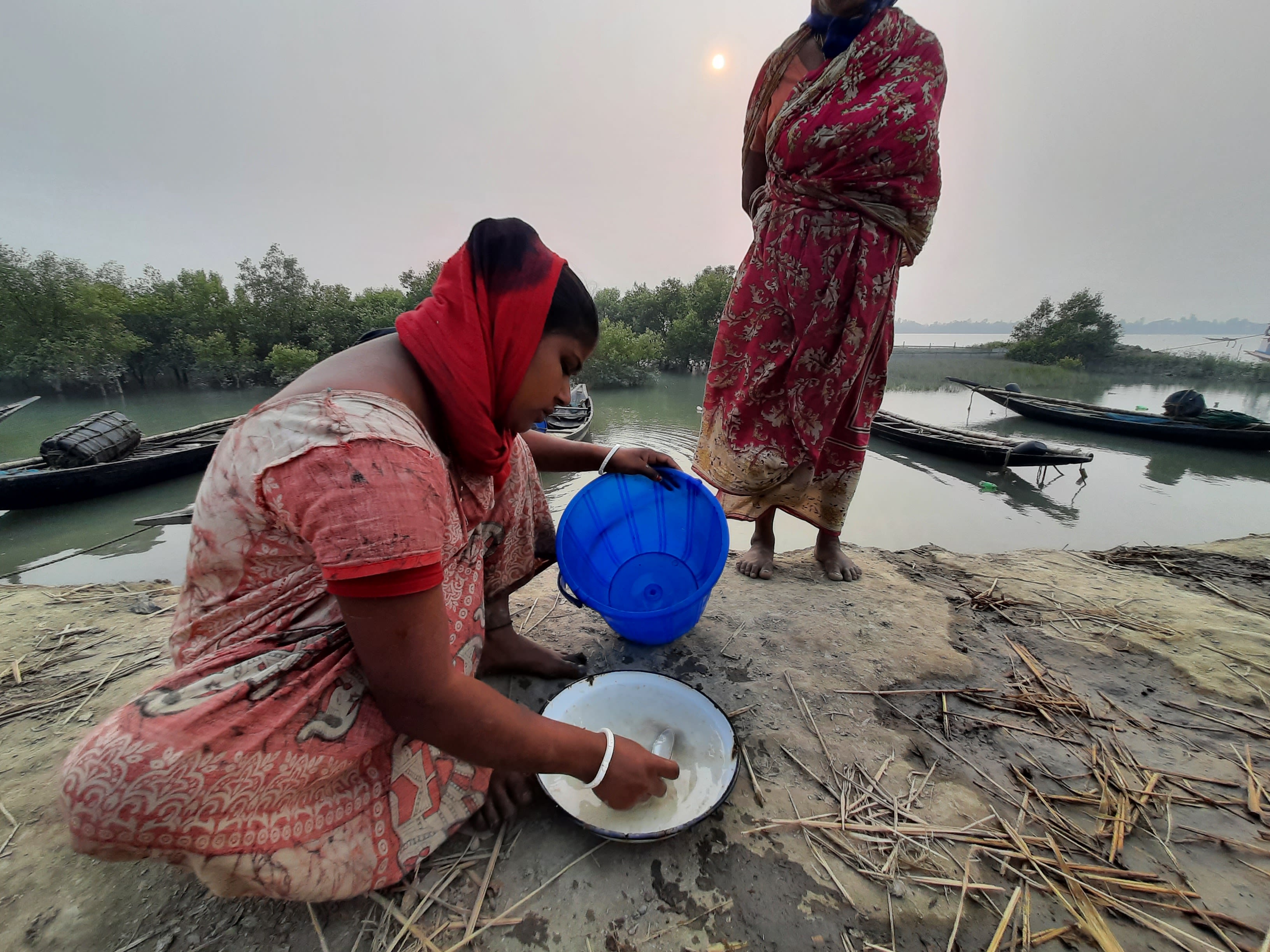
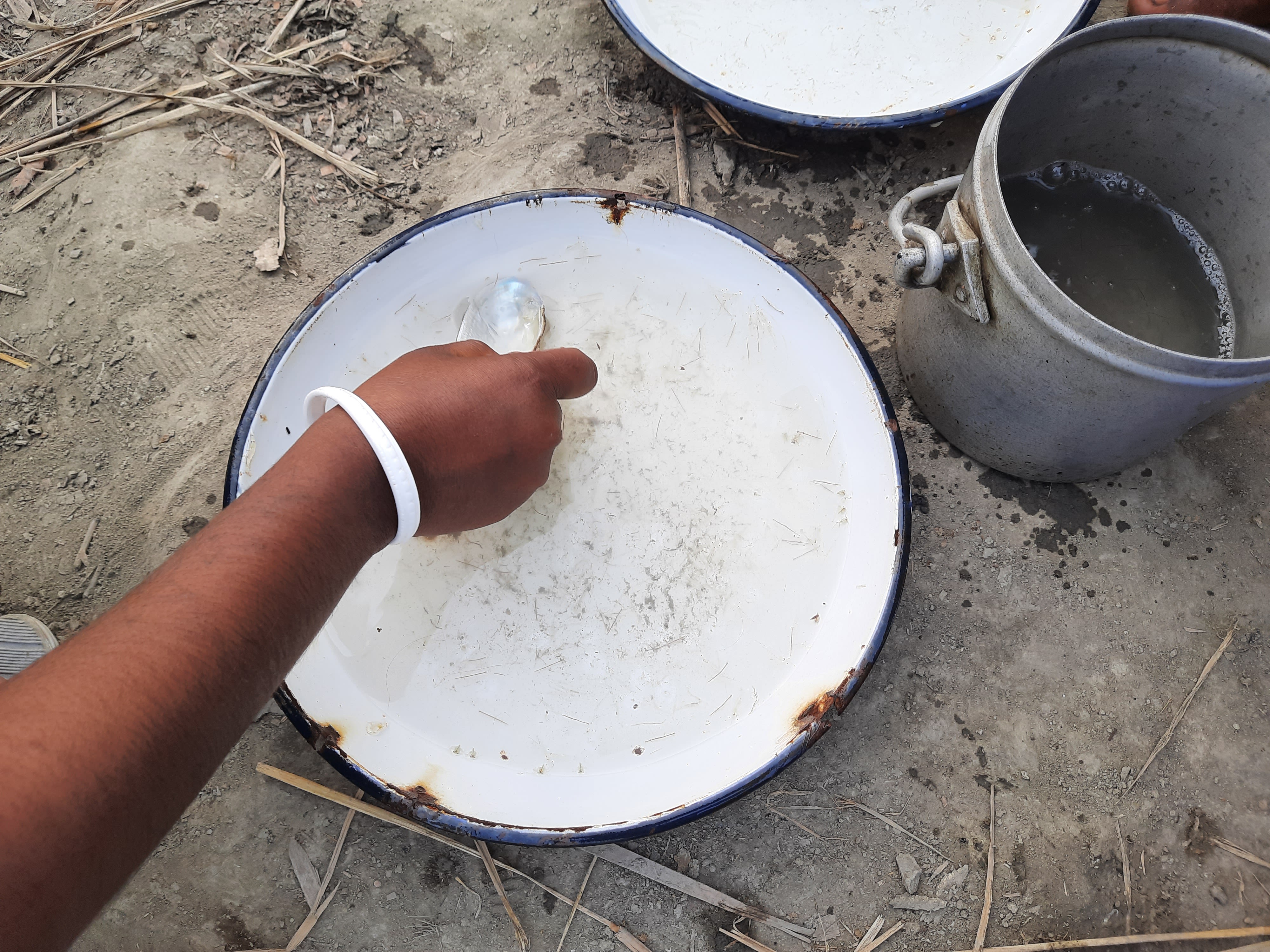
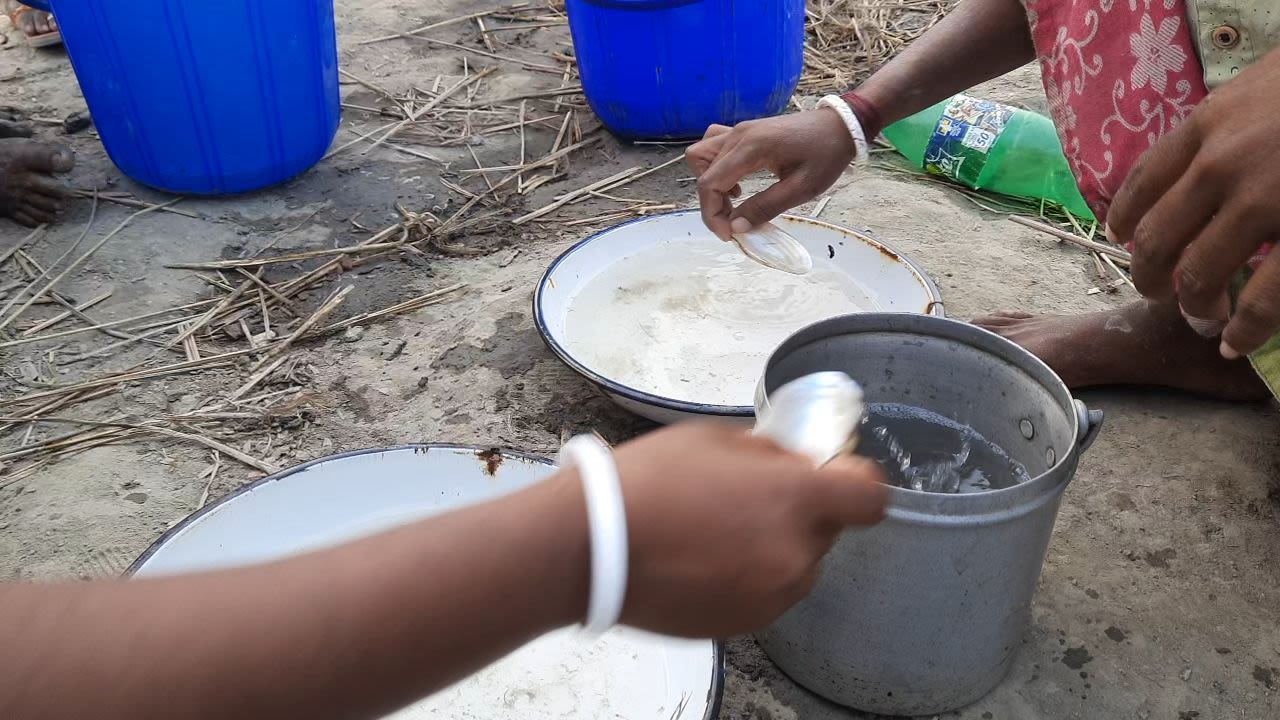
The women sit by the river and separate out the unwanted catch from the prawn seed.
“Small parshe fish, fesha fish, and eggs of fish or crabs also get caught,” said Lakshmi Mondal. “We can’t sell or eat them, so we throw them away.”

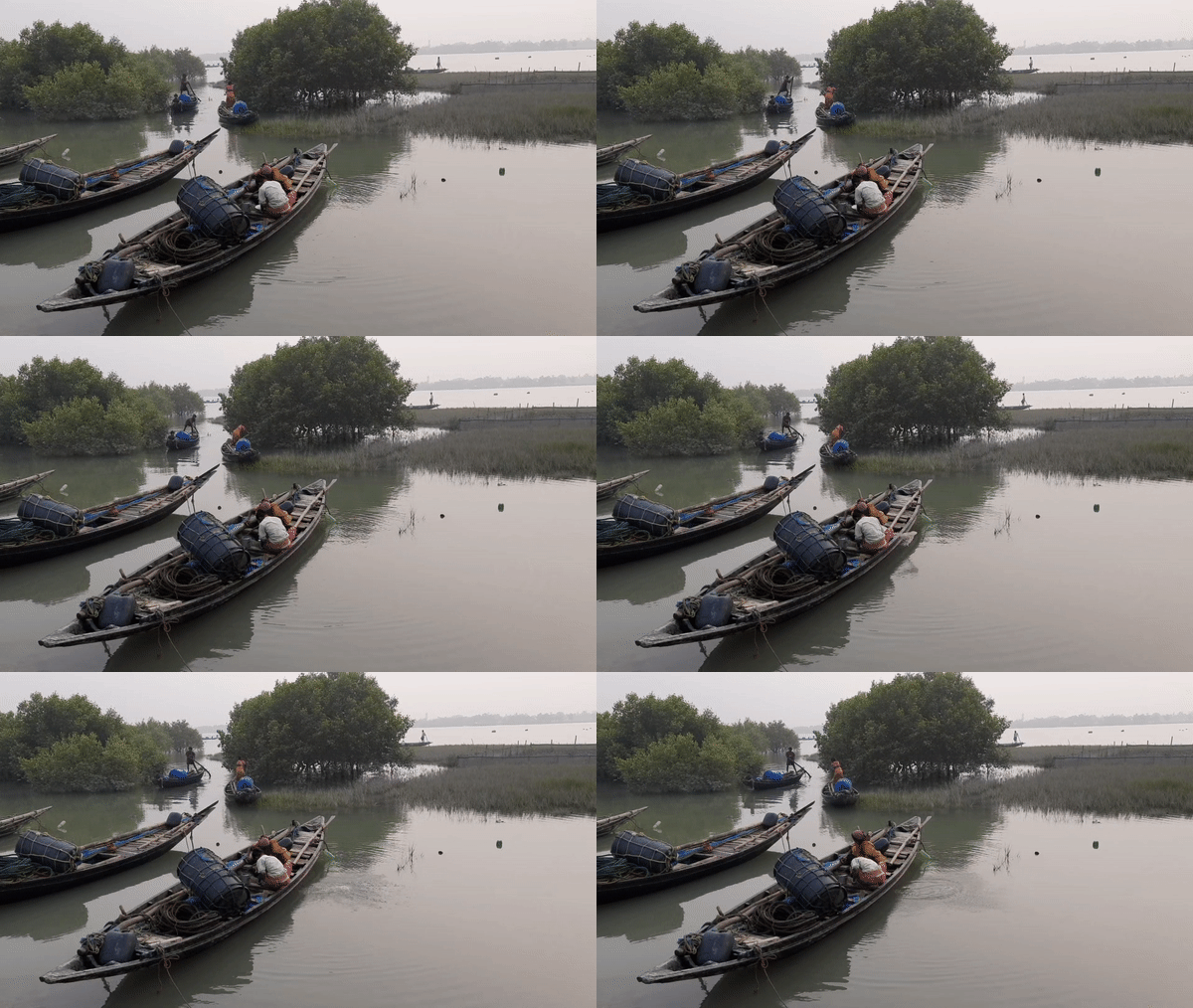
Throwing out the unwanted catch
Throwing out the unwanted catch

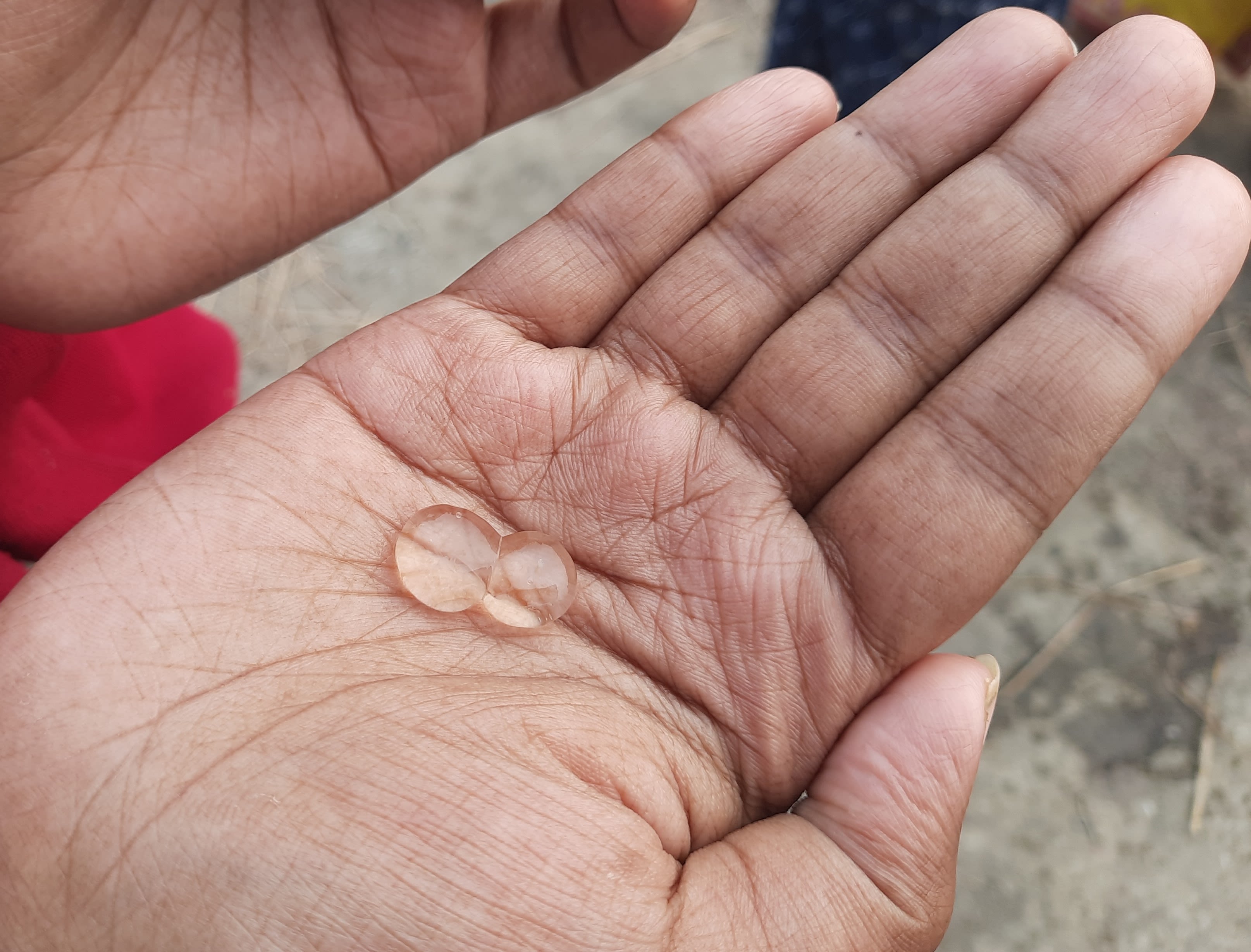
Fish eggs, to be discarded
Fish eggs, to be discarded
They sell the prawn seed to traders, who transport and sell them to hatcheries where prawns are reared. “They pay Rs 200–300 for 1,000 prawn seeds,” said Promila Sana of Pakhiralay (38), “but we usually can’t catch 1,000.”
“Kono thik nei — there is no certainty,” said Lakshmi Ghosh of Kumirmari (32), as to how many they can catch a day. “It depends on the river. I spend 3–4 hours in the water—sometimes I catch 1,000, sometimes none at all.” After paying for everyday expenses and children’s schooling and tuition, she has hardly any savings.
Like the availability of catch, the women’s lives and livelihoods are characterised by uncertainty. There isn’t any other work they can do to earn more. Most of the women are landless, or have small holdings.
Lakshmi Mondal’s family has 1–2 bighas of land, on which they cultivate beet, pumpkin, potatoes etc. for their own consumption. “But now we can’t even grow enough for that,” she said, as soil salinity has increased after the river waters flooded their fields during repeated cyclones in recent years.
Neither does the Sundarbans being a tourist hotspot yield financial dividends for everyone. “There is some work as cooks in tourist boats nowadays,” said Madhabi Mondal of Pakhiralay.
“It pays around Rs 300 a day, but those with connections in the hotels get the work — we may get work for 1–2 days a month,” she added.
Fishing for more lucrative catch like big fish or crabs requires going into the Sundarbans Reserve Forest.
“Crabs sell for Rs 1 lakh a quintal,” said Lakshmi Mondal, “but you don’t get them here — and if you go into the forest, you’ll get eaten by tigers!”
Going into the forest for fishing also requires a government permit, which is not easy to get.
Livelihood vs conservation
Human-wildlife conflict is a recurring feature of life in the Sundarbans. The practice of pulling the nets along the river banks and discarding the unwanted fauna leads to loss of biodiversity, according to Dr Chandrima Sinha, Programme Manager at the Nature, Environment and Wildlife Society, which works on environmental conservation and sustainable livelihoods in the Sundarbans.
Kumirmari Gram Panchayat Pradhan Debashish Mondal said the government makes efforts to reduce biodiversity loss from such practices. “May–June is the time when fish lay eggs and babies are born,” he said. “During that time, pulling nets through the water is prohibited. But it is not possible to guard all the waters all the time — a little biodiversity loss may happen,” he said.
The practice also has further implications for livelihoods. “The problem is that popular marketable species such as parshe, topshe, grey mullet, mackerel etc. have started to dwindle in number,” said Sinha. “This affects the livelihoods of fisherfolk who depend on these species.”
Yet, the demand for prawns means the prawn seed collectors continue to supply it. “There is limited availability of the certified seed in West Bengal,” she explained, “so the hatcheries source it through this wild seed collection, which is also cheaper.”
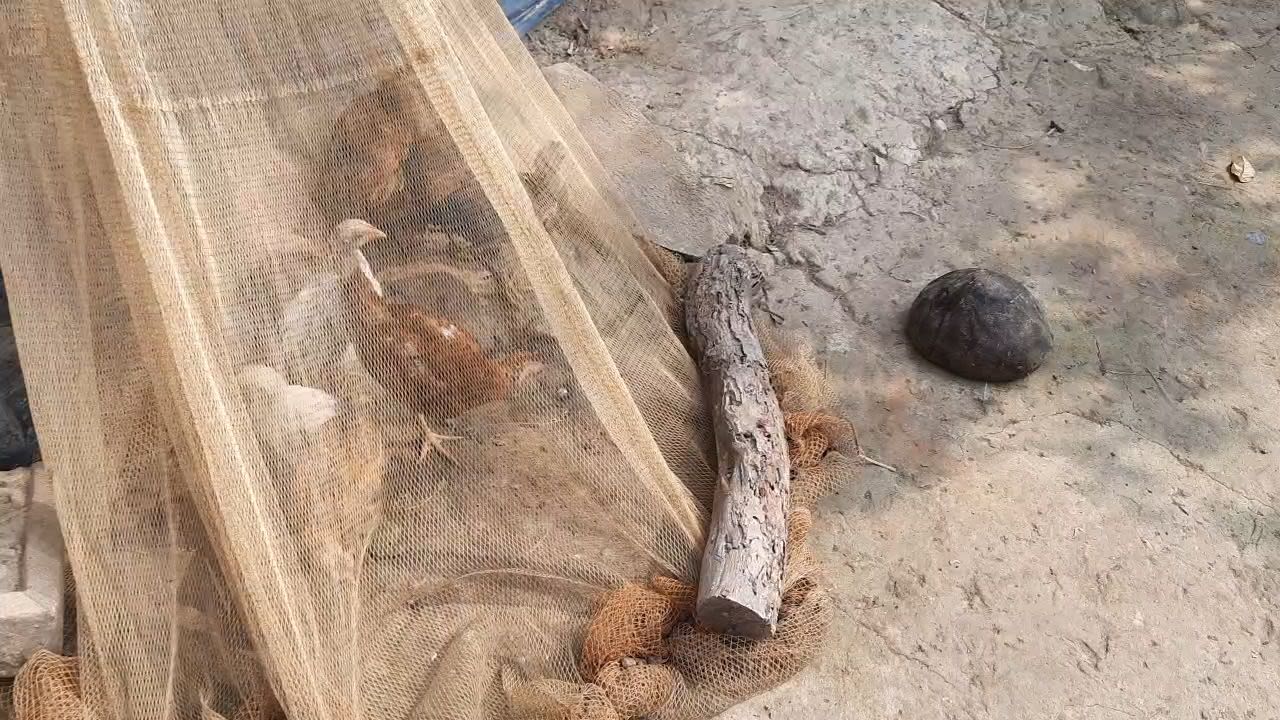
There is a need for alternative livelihoods, Sinha said. “Poultry farming can be a viable and sustainable option as many of the prawn seed collectors have poultry animals for their own consumption needs but do not sell the produce in the market,” she argued.
“West Bengal has to buy eggs from states like Andhra Pradesh as there is not enough supply here,” she explained. “Organic eggs from the Sundarbans can meet this demand gap, and the women can earn more.”
 Built with Shorthand